
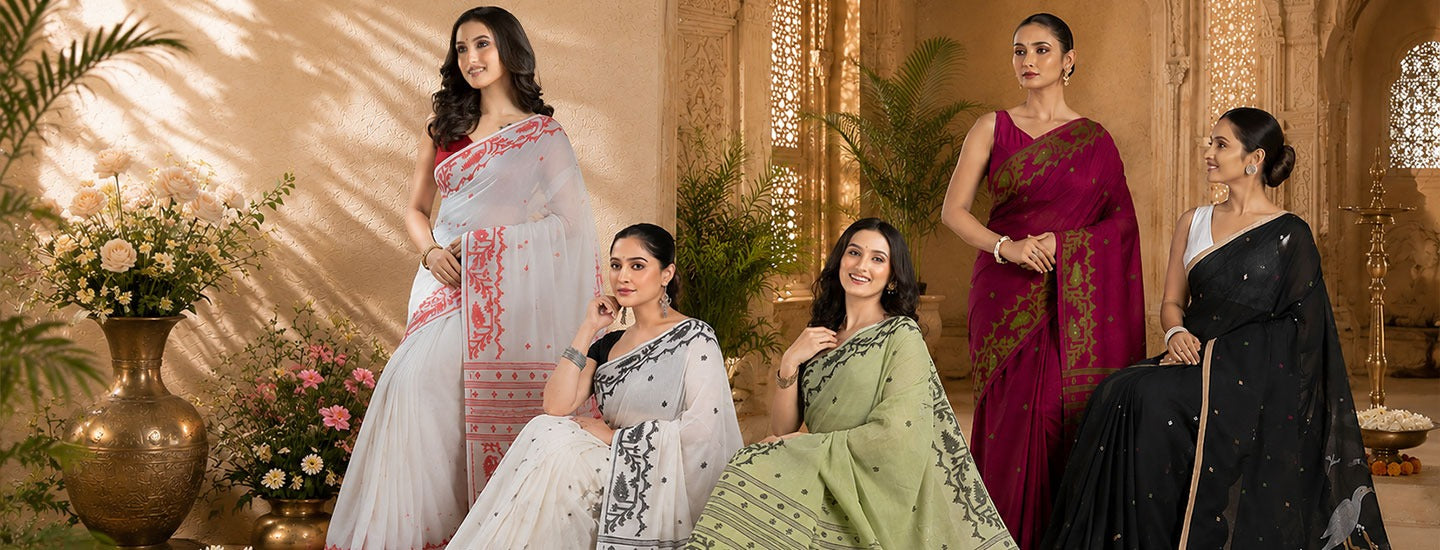
Jamdani Saree Shopping Guide: How to Find and Identify Real Jamdani
Share
Have you ever wondered why an authentic Jamdani saree is known to be so soft and featherlight, but the one you bought online feels stiff and heavy?
You have been burned by machine-made duplicates pretending to be luxury handlooms. And you aren’t alone. The market is flooded with clever counterfeits that look great in a heavily filtered photo, but the moment you touch the fabric, the illusion breaks.
A real Jamdani saree is very different. A genuine handwoven Jamdani piece is famously lightweight, incredibly soft, breathable, and drapes like a dream. Those intricate motifs aren't embroidered on top or printed on; they are meticulously woven into the fabric by an artisan spending weeks at a loom.
So, how do you protect your money and make sure you’re buying actual wearable art? This guide skips the fluff to show you exactly how to spot an original Jamdani saree, call out the fakes, and style it with effortless confidence. Ready to learn what to look for?
What Is a Jamdani Saree?
A Jamdani saree is a handwoven textile distinguished by intricate motifs woven directly into the fabric using an extra-weft technique. Unlike printed or embroidered designs, the motifs are inserted by hand during the weaving process, which makes each saree unique.
The word "Jamdani" is believed to originate from Persian:
-
"Jam" meaning flower
-
"Dani" meaning vase or container
The name reflects the floral and geometric patterns traditionally associated with Jamdani weaving. Today, Jamdani remains one of the finest examples of textile craftsmanship in South Asia and continues to be highly valued by saree enthusiasts worldwide.
The Rich History of Jamdani Weaving
The roots of Jamdani weaving can be traced back over 2,000 years to ancient Bengal. Historical references to fine muslin fabrics appear in texts such as the Arthashastra, written by Kautilya around the 3rd century BCE. During the Mughal period, Jamdani weaving flourished under royal patronage and became one of the most sought-after luxury textiles in the world.
Dhaka emerged as the primary center for production, which is why the original Dhakai Jamdani saree continues to hold a prestigious position among collectors and handloom enthusiasts.
During the colonial period, machine-made textiles severely impacted traditional weaving communities. Despite these challenges, artisans preserved the craft through generations.
A significant milestone came in 2013 when UNESCO recognized traditional Jamdani weaving as an Intangible Cultural Heritage of Humanity, highlighting its cultural and artistic importance.
How a Jamdani Saree Is Made
The beauty of a Jamdani saree lies not only in its appearance but also in its labor-intensive creation process.
The Weaving Process
- Fine cotton, muslin, or silk yarn is prepared and treated.
- Warp threads are arranged on a loom.
- Weavers manually insert additional weft threads to create motifs.
- Every motif is woven individually without the aid of automated machinery.
- The saree is completed over weeks or sometimes months, depending on complexity.
Unlike machine-made fabrics, there are no shortcuts. A simple Jamdani saree may take several weeks to complete, while highly intricate pieces can require months of skilled labor.
Popular Types of Jamdani Sarees
Cotton Jamdani Saree
A cotton jamdani saree remains the most popular choice for everyday elegance. Why women love it:
-
Lightweight and breathable
-
Ideal for humid weather
-
Comfortable for long hours
-
Suitable for office wear and casual events
Its versatility makes it one of the most practical handloom investments.
Muslin Jamdani Saree
The muslin jamdani saree represents the finest expression of traditional weaving. Historically, muslin from Bengal was so delicate that it was often described as "woven air."
Key features include:
-
Extremely fine texture
-
Lightweight drape
-
Intricate handwoven motifs
-
Premium craftsmanship
These sarees are often chosen for cultural gatherings, celebrations, and special occasions.
Tussar Jamdani Saree
A tussar jamdani saree combines the traditional Jamdani weaving technique with the rich texture of tussar silk.
Benefits include:
-
Natural golden sheen
-
Richer appearance
-
Excellent festive wear option
-
Elegant drape for weddings and celebrations
For those seeking something more luxurious than cotton, tussar Jamdani offers an excellent balance between sophistication and comfort.
Why Jamdani Sarees Continue to Trend Today
Despite the rise of fast fashion, demand for handloom textiles continues to grow. Several factors contribute to the enduring popularity of the Jamdani saree:
Sustainable Fashion
As more people embrace slow fashion, handwoven textiles like Jamdani have gained renewed appreciation. Unlike mass-produced garments, authentic Jamdani sarees are woven by skilled artisans using traditional techniques that require minimal industrial processing and lower energy consumption. Choosing a Jamdani not only reduces the environmental impact of fashion but also supports artisan communities and helps preserve centuries-old weaving traditions.
Versatility
One of the biggest strengths of a Jamdani saree is its versatility. Its elegant yet understated designs make it suitable for almost every occasion, whether it's a day at the office, a festive celebration, a wedding, a family gathering, or a cultural event. With the right blouse, jewellery, and accessories, the same saree can be styled in multiple ways to suit different settings.
A Timeless Investment
Fashion trends come and go, but Jamdani has remained admired for generations. Its intricate motifs, graceful drape, and handcrafted beauty never feel outdated, making it a wardrobe investment rather than a seasonal purchase. An authentic Jamdani saree is a piece that can be worn, cherished, and even passed down through generations while retaining its elegance and cultural significance.
How to Style a Jamdani Saree
For Office Wear
A Jamdani saree can make an elegant addition to your work wardrobe. Choose subtle motifs in pastel or neutral shades for a refined, professional look. Pair it with a structured blouse and keep accessories minimal with simple studs, a delicate watch, or a sleek handbag to create an outfit that is both polished and comfortable for long workdays.
For Festivals
Festivals are the perfect occasion to embrace the artistic beauty of Jamdani. Rich hues such as maroon, mustard, emerald, or navy instantly create a festive appeal. Pair your saree with statement earrings, handcrafted footwear, and a contrasting blouse to add depth and personality while keeping the traditional charm intact.
For Weddings
For weddings and grand celebrations, opt for a silk or tussar Jamdani saree featuring intricate, densely woven motifs. Complement the look with heirloom or traditional jewellery, an elegant updo, and a classic clutch to create a timeless ensemble that beautifully blends heritage with sophistication.
How to Identify an Authentic Jamdani Saree
Due to rising demand, machine-made replicas are common. Look for these signs:
Motifs Are Woven, Not Printed: The patterns should be integrated into the fabric itself.
Visible Handwork: Small thread insertions on the reverse side indicate authentic weaving.
Soft, Breathable Fabric: Authentic jamdani fabric feels light and comfortable, not stiff or synthetic.
Slight Irregularities: Perfect uniformity often signals machine production. Handwoven textiles naturally show minor variations.
Transparent Seller Information: Reliable sellers usually provide details about weaving techniques, artisan communities, and fabric composition.
Why Are Authentic Jamdani Sarees Expensive?
An original Jamdani saree is valued for the exceptional craftsmanship behind every weave. Unlike machine-made sarees, they are carefully handwoven like a true work of art. The price reflects several factors:
- Depending on the design, a single saree can take weeks or even months to weave.
- Every motif is woven by hand using the intricate supplementary weft technique, requiring years of expertise.
- Fine cotton, muslin, silk, or tussar yarns contribute to the saree's comfort, durability, and elegant finish.
- Since each saree is handmade, artisans can produce only a limited number of pieces each year.
- Every authentic Jamdani represents centuries of weaving tradition and helps sustain the livelihoods of skilled handloom artisans.
When you buy a genuine Jamdani saree, you're investing in timeless craftsmanship, exceptional quality, and a living heritage that cannot be replicated by mass production.
Where to Buy Authentic Jamdani Sarees
Finding an authentic Jamdani saree can be challenging in a market flooded with machine-made imitations. The best approach is to choose a brand that works closely with skilled artisans and remains committed to preserving traditional weaving techniques.
At Praavii, every Jamdani saree is thoughtfully curated from Bengal's rich handloom heritage. From elegant everyday weaves to occasion-ready drapes, the collection showcases the beauty of authentic craftsmanship while meeting the needs of the modern woman. Whether you're looking for a breathable cotton jamdani saree for daily wear, a graceful muslin jamdani saree for cultural gatherings, or a festive tussar jamdani saree, you'll find pieces that balance tradition, comfort, and timeless style.
Praavii also offers carefully selected jamdani suits and handcrafted textiles woven by experienced artisans who have carried forward this heritage for generations.
Frequently Asked Questions
1. What is special about a Jamdani saree?
A Jamdani saree is handwoven using a unique supplementary weft technique that creates intricate motifs directly within the fabric, making every piece distinctive and highly skilled in craftsmanship.
2. Is a cotton Jamdani saree good for daily wear?
Yes. A cotton jamdani saree is breathable, lightweight, and comfortable, making it ideal for office wear, casual outings, and everyday use.
3. What is the difference between a Dhakai Jamdani and other Jamdani sarees?
The original Dhakai Jamdani saree originates from the historic weaving traditions of the Dhaka region and is known for exceptionally fine weaving and intricate motifs.
4. How long does it take to weave a Jamdani saree?
Depending on the complexity of the design, a handwoven Jamdani saree may take anywhere from a few weeks to several months to complete.
5. How can I tell if a Jamdani saree is authentic?
Check whether the motifs are woven into the fabric rather than printed, examine the reverse side for hand-inserted threads, and buy from trusted handloom sellers who provide transparency about sourcing and craftsmanship.


